Is Your Home Helping You Stay Independent—or Making It Harder?
Category:

Most of us choose our homes based on what works for us at a particular point in our lives.
Stairs aren’t a problem. The bathtub is easy to step into. Carrying laundry across the house doesn’t require a second thought. Getting up from a favorite chair is effortless.
But while we may stay in the same home for decades, we don’t necessarily move through that home the same way forever.
As strength, balance or mobility changes, features that once seemed completely ordinary can gradually make everyday life more difficult.
That’s why one of the most useful questions for an older adult who wants to remain independent may be:
Does my home still work for me?
Start With How You Actually Live
A home-safety review shouldn’t simply be a hunt for hazards.
Instead, look at the activities someone performs every day and ask where the home may be making those activities unnecessarily difficult.
Can they comfortably get in and out of their favorite chair?
Can they reach the bathroom easily at night?
Can they step safely into the shower?
Are commonly used items stored where they can be reached without stretching, bending or climbing?
Can they enter and leave the house comfortably?
Can they carry a meal from the kitchen to where they eat?
Can they navigate stairs safely?
These aren’t abstract safety questions. They are questions about everyday independence.
Small Obstacles Can Become Bigger Obstacles
Some potential concerns are easy to identify.
Loose rugs, electrical cords across walkways, poor lighting and clutter are familiar examples.
But other obstacles aren’t necessarily “unsafe” by themselves.
A low sofa may be perfectly comfortable until getting up from it becomes difficult.
A bathroom may have worked well for 25 years until stepping over the side of the tub becomes challenging.
A bedroom upstairs isn’t a problem until stairs become exhausting or difficult to navigate.
Even the distance between rooms can matter when walking becomes more tiring.
The house hasn’t changed.
The relationship between the person and the house has.
Pay Attention to Workarounds
Sometimes the best clues aren’t found in the house itself. They’re found in the ways someone has changed their behavior.
Maybe Dad has stopped using the upstairs.
Maybe Mom holds onto furniture as she moves through a room.
Perhaps someone avoids showering unless another person is home.
Maybe meals are becoming simpler because standing in the kitchen has become tiring.
Or an older adult has started spending most of the day in one part of the house because moving around takes more effort.
These adaptations can be practical. But they can also be signals that an activity or part of the home has become more difficult.
Rather than asking only, “Has Mom fallen?”, it can be helpful to ask, “What has Mom stopped doing—or started doing differently?”
The Goal Isn’t a Perfectly Risk-Free Home
No home can eliminate every possibility of a fall or injury.
And creating a safer environment doesn’t necessarily require remodeling the entire house.
Sometimes relatively simple changes can make everyday activities easier: improving lighting, clearing pathways, reconsidering furniture placement or putting frequently used items within easier reach.
Other situations may benefit from professional guidance about modifications, equipment or changes appropriate to the individual’s needs.
The important thing is to match the response to the actual concern.
Look at the Person and the Home Together
A home that works beautifully for one person may present challenges for another.
That’s why evaluating someone’s ability to remain safely and independently at home should include both sides of the equation:
How is the person functioning?
and
How well does the home support that person?
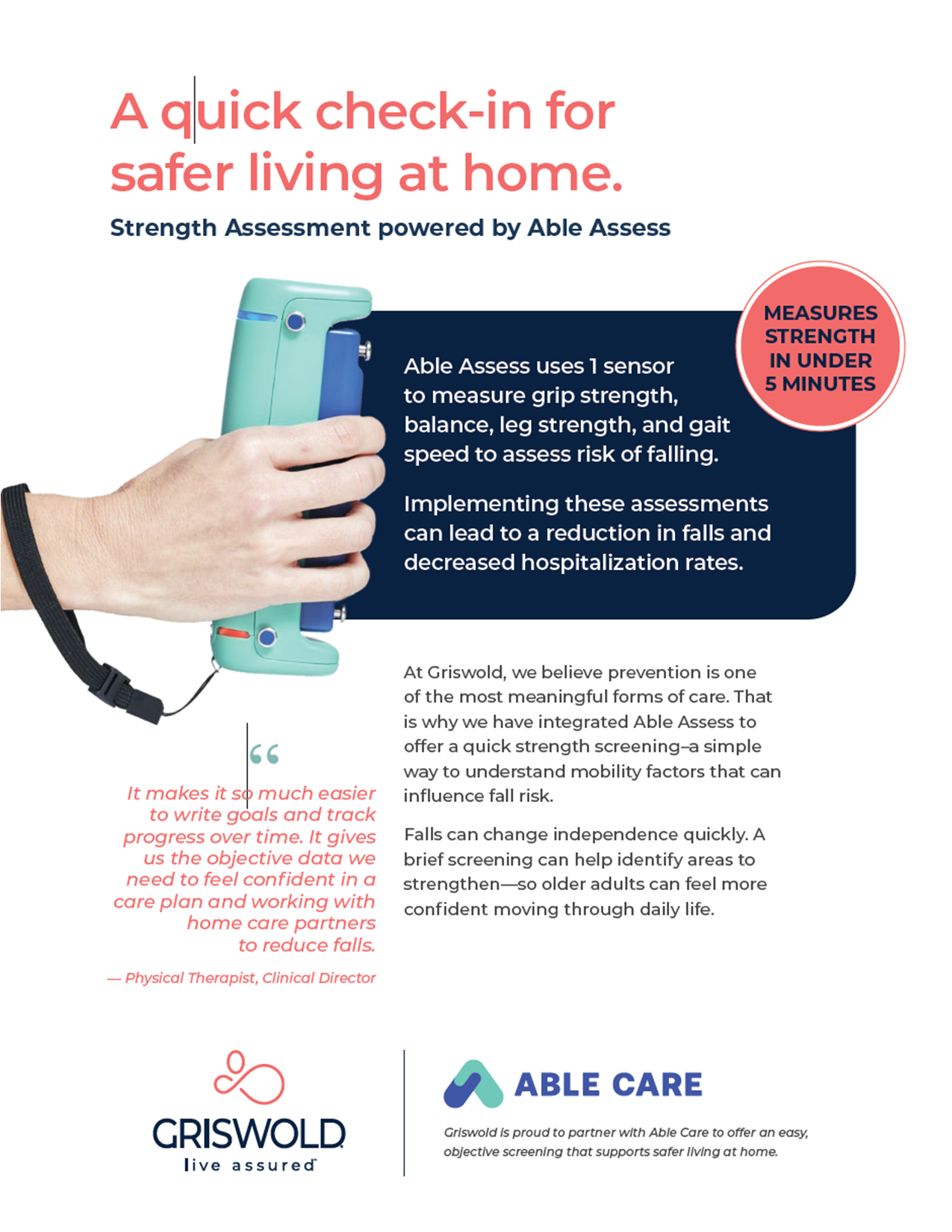
Changes in strength and mobility may help explain why certain activities have become harder. Looking at the environment may reveal opportunities to make those activities easier or safer.
Neither tells the whole story by itself.
Independence Is About Making the Environment Work for You
For many older adults, remaining at home is an important goal.
Supporting that goal isn’t simply about waiting until something goes wrong. It means occasionally looking at the home with fresh eyes and recognizing that what worked five or ten years ago may not be the best solution today.
Walk through the house.
Pay attention to the places where everyday activities require extra effort.
Notice the workarounds.
Ask what has become harder.
Sometimes a few thoughtful changes can help the home continue doing what it was always supposed to do:
Support the person who lives there.
If you’re beginning to wonder whether an older loved one is functioning as safely and independently at home as they once did, Griswold Care Pairing can help families think through their concerns and explore appropriate resources and support.
Sometimes the right answer is home care. Sometimes it’s a home modification, professional evaluation, technology, community resource—or simply better information about what has changed.
The goal is not to push one solution.
It’s to help older adults remain as safe, comfortable and independent as possible.
Subscribe
Date: August 26, 2026
Category: