Why Falls Happen: It’s Not Just Clutter and Rugs
Category:
When families think about preventing falls at home, they often start with the house itself.
Remove loose rugs. Clear clutter from walkways. Improve lighting. Add grab bars in the bathroom. Make sure frequently used items are within easy reach.
Those are all important steps. But they only address part of the picture.
A safer home environment matters, but so does how safely an older adult is able to move through that environment.
Look Beyond the House
Changes in strength, balance and mobility can happen gradually. Because they don’t always happen overnight, families may not immediately recognize them as potential concerns.
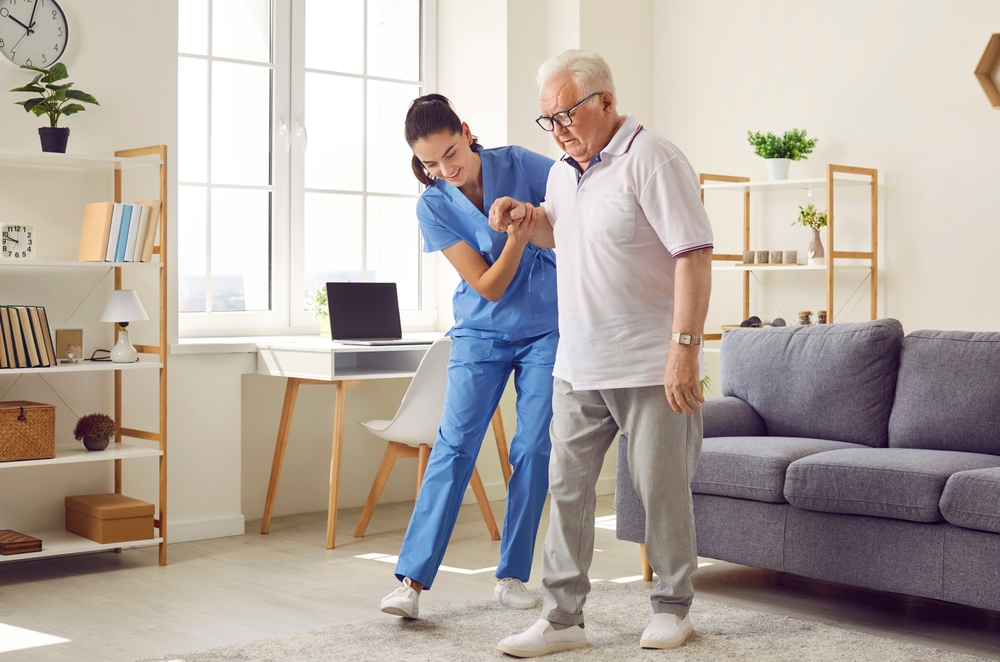
You might notice that Mom now uses her arms to push herself out of a chair. Dad walks a little more slowly than he used to. Someone who once moved confidently around the house begins holding onto furniture or hesitating before using the stairs.
Individually, these changes may seem small. Together, they can tell us something important about how a person is functioning in everyday life.
That is why thinking about fall risk shouldn’t stop with a home-safety checklist.
Strength and Mobility Matter Too
Consider some of the ordinary movements we perform every day:
- Getting up from a chair
- Walking across a room
- Turning around
- Sitting back down
- Maintaining balance while moving
- Walking at a comfortable pace
These activities depend on a combination of strength, balance and mobility.
When those abilities change, everyday activities can become more difficult—even when the home itself hasn’t changed.
This is why a comprehensive approach to safer living at home should consider both the environment and the individual.
Sometimes What We See Isn’t the Whole Story
Families are often very good at noticing significant changes. A fall, a sudden difficulty with stairs or an obvious loss of mobility gets our attention.
Gradual changes can be harder to recognize.
Objective measurements can add another piece of information by helping identify areas of strength and mobility that may deserve a closer look.
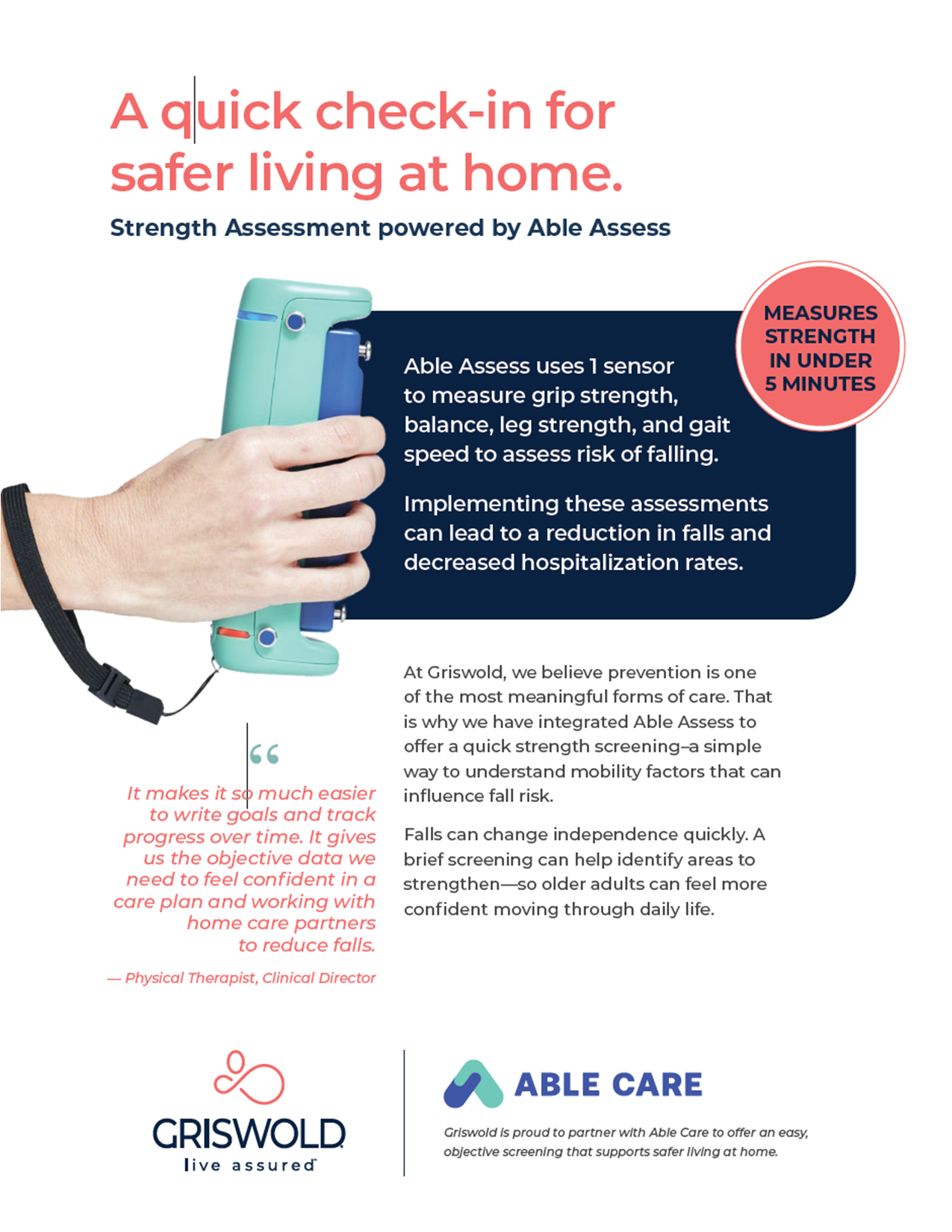
Griswold Care Pairing now offers a Strength Assessment powered by Able Assess, an easy, objective screening designed to support safer living at home.
The screening looks at four key areas:
Grip Strength
A simple indicator associated with overall strength and resilience.
Chair Stand
Looks at lower-body strength, which is important for getting up safely and maintaining stability.
Timed Up & Go
Observes balance and mobility during an everyday “stand, walk, turn, sit” movement pattern.
Gait Speed
Measures walking pace, which is often linked with functional independence.
The screening takes less than five minutes, and the results provide objective information that can establish a baseline and help support conversations about prevention and safer living at home.
What Happens If There Is a Concern?
A screening isn’t a diagnosis, and identifying a potential concern doesn’t automatically mean someone needs home care.
It means there may be something worth paying attention to.
Depending on the individual, the appropriate next step could include talking with a healthcare provider, looking more closely at the home environment, addressing strength or mobility concerns with an appropriate professional, or considering additional support with everyday activities.
The goal is to have better information before a fall or other event forces the conversation.
Safer Independence Starts With Understanding Risk
Helping an older adult remain safely at home isn’t about eliminating every possible risk. It’s about recognizing where risks may exist and taking reasonable steps to address them.
That means looking at the rugs, lighting and grab bars.
But it also means looking at the person walking across those rugs, getting out of that chair and moving through that home every day.
Sometimes a few minutes spent understanding strength and mobility can provide useful information about what may help someone continue doing those things safely and independently.
Interested in learning more?
Contact Griswold Care Pairing to learn about our Strength Assessment powered by Able Assess and how a quick check-in can provide objective information about strength, mobility and factors that can influence fall risk.
The screening and GripAble hand-held device are for prevention-support purposes only. The screening is not a medical exam and does not diagnose medical conditions. If you have concerns or have experienced recent falls, talk with your healthcare provider.
Subscribe
Date: August 13, 2026
Category: