Is It Safe to Stay at Home? What Tampa Families Should Look at Before Making a Move
Category:
For many older adults, home is much more than a place to live—it’s where they’ve built a lifetime of memories. It’s no surprise that most seniors hope to remain in their own homes for as long as possible.
For families throughout Tampa Bay, however, deciding whether a loved one can continue living safely at home isn’t always easy. The question isn’t simply, “Does Mom want to stay home?” The more important question is:
“Can she safely stay at home?”
Too often, families don’t begin asking that question until after a fall, hospitalization, or other crisis forces them to make difficult decisions under pressure.
The good news is that many older adults can continue living safely and independently at home—with the right planning and support. The key is evaluating safety before a crisis occurs.
1. Is Your Loved One Steady on Their Feet?
Falls are one of the leading causes of injury and hospitalization among older adults. While loose rugs and poor lighting certainly contribute, many falls occur because of gradual changes in balance, muscle strength, mobility, or walking speed.
Ask yourself:
- Have they fallen during the past year?
- Do they seem unsteady while walking?
- Do they hold onto furniture or walls for support?
- Is it becoming difficult to stand up from a chair?
- Have they stopped participating in activities because they’re afraid of falling?
These changes often happen so gradually that families don’t recognize them until everyday life becomes noticeably more difficult.
2. Can They Still Manage Daily Activities?
Living independently means more than simply living alone.
Consider whether your loved one can safely manage:
- Bathing and personal hygiene
- Dressing
- Preparing healthy meals
- Housekeeping and laundry
- Grocery shopping
- Taking medications correctly
- Managing appointments
- Driving or arranging transportation
Needing help with one or two of these activities doesn’t automatically mean someone needs assisted living. Often, a little additional support can help someone remain safely at home much longer.
3. Are Memory or Judgment Beginning to Change?
Occasional forgetfulness is a normal part of aging. More significant changes in memory or judgment deserve attention.
Watch for signs such as:
- Missing medications
- Forgetting appointments
- Leaving the stove on
- Difficulty managing finances
- Getting lost in familiar places
- Poor decision-making
- Asking the same questions repeatedly
Recognizing these changes early allows families to explore solutions before safety becomes a major concern.
4. Is the Home Still Safe?
Sometimes the home itself creates unnecessary risks.
Take a careful look for:
- Poor lighting
- Loose rugs
- Cluttered walkways
- Stairs without secure handrails
- Bathrooms lacking grab bars
- Difficult-to-reach cabinets
- Uneven sidewalks or entryways
Many of these hazards can be corrected with simple modifications that improve safety while allowing someone to continue living independently.
5. Are They Becoming Socially Isolated?
Safety isn’t only about preventing falls.
Isolation can contribute to depression, poor nutrition, declining physical activity, and worsening overall health.
Ask yourself:
- How often do friends or family visit?
- Are they participating in activities they once enjoyed?
- Do they have reliable transportation?
- Does someone check on them regularly?
Companionship and regular social interaction often play an important role in helping older adults remain healthier, happier, and more independent.
6. How Is the Family Caregiver Doing?
Sometimes the greatest risk isn’t the older adult.
It’s the exhausted spouse, daughter, son, or other family caregiver trying to do everything alone.
Family caregivers often balance careers, children, and their own health while providing care for someone they love.
Ask yourself:
- Is caregiving becoming overwhelming?
- Are you constantly worried?
- Are you losing sleep?
- Have family relationships become strained?
Recognizing caregiver stress isn’t a sign of failure. It’s often the first step toward finding solutions that benefit everyone involved.
There Are More Choices Than Most Families Realize
Many people believe they have only two options:
- Continue struggling at home, or
- Move into assisted living.
Fortunately, there are often many options between those extremes, including:
- Home safety modifications
- Family support
- Transportation services
- Adult day programs
- Aging Life Care professionals
- Personal emergency response systems
- Private-duty home care
- Assisted living when and if it becomes appropriate
Every family’s situation is different. The goal isn’t choosing one solution for everyone—it’s finding the right combination of support that matches your loved one’s needs and wishes.
Don’t Wait for a Crisis
One fall. One hospitalization. One medication mistake.
That’s often what finally forces families to make decisions they wish they had discussed months earlier.
Starting the conversation now gives everyone time to consider options thoughtfully, involve your loved one in the decision-making process, and develop a plan before an emergency occurs.
Helping Tampa Bay Families Make Confident Decisions
For more than 18 years, Griswold Care Pairing for Tampa & Pasco has helped families throughout Tampa, Carrollwood, New Tampa, Lutz, Westchase, Brandon, Riverview, Wesley Chapel, Trinity, Land O’ Lakes, and New Port Richey understand their options for aging safely at home.
Sometimes the answer is a few home modifications. Sometimes it’s companionship a few hours each week. Sometimes it’s respite care for a family caregiver, personal care, or support after a hospital stay. And sometimes assisted living is the right choice. Every family—and every care plan—is unique.
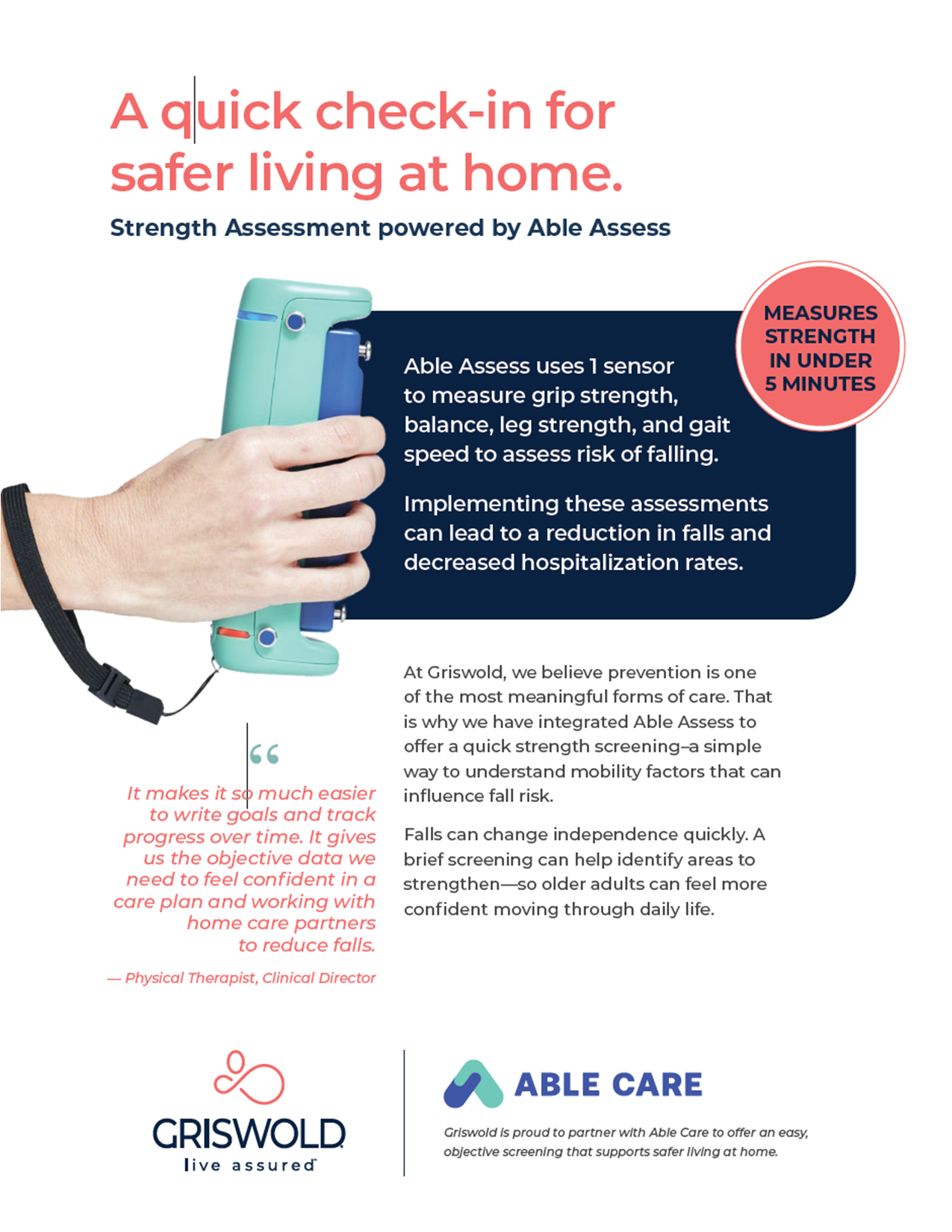
Later this year, we’ll also introduce a new strength and fall-risk screening resource designed to provide families with objective information about mobility and functional safety. Our goal is to help families make informed decisions before small concerns become larger problems.
If you’re beginning to wonder whether a parent or loved one can continue living safely at home, we’re here to answer your questions, discuss available resources, and help you explore your options—without pressure and without obligation.
Subscribe
Date: July 20, 2026
Category: