
Essential Legal Tips for Dementia Care in Wake County
Category:
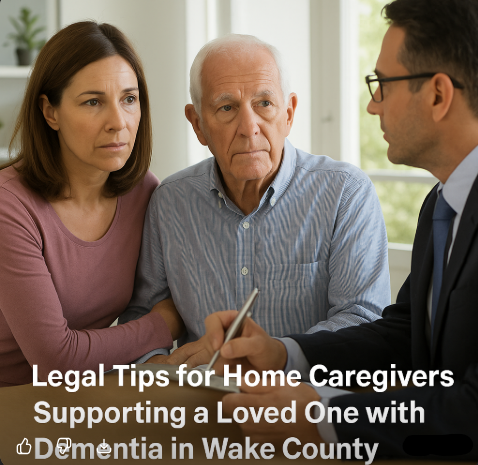
Caring for a loved one with dementia—whether it’s a parent, spouse, or sibling—is a deeply personal journey. It’s filled with love, responsibility, and tough decisions. If you live in Raleigh or anywhere in Wake County, know that you’re not alone. Many families are walking this path with you.
But while your focus may be on daily care, it’s also crucial to protect yourself legally and financially. This guide will help you take important legal steps to safeguard your family’s future and reduce stress later on.
1. 📝 Establish a Durable Power of Attorney (POA)
A Durable Power of Attorney gives someone legal authority to manage your loved one’s finances, property, and legal affairs if they can no longer do so.
Why it matters:
Without this document in place before dementia progresses too far, you may lose the legal ability to act on their behalf.
North Carolina Tip:
To be valid, POAs must be notarized and signed by two witnesses. Many local banks, UPS stores, and libraries offer notary services.
🔗 Learn more about NC POA requirements
2. 🩺 Secure a Health Care Power of Attorney (HCPOA)
Medical decisions require a separate legal document. A Health Care Power of Attorney allows you to make healthcare decisions when your loved one cannot.
What you should do now:
- Have a conversation about a living will—what treatments they want or don’t want.
- Register the HCPOA with the NC Secretary of State’s Advance Directive Registry.
📍 Use our Home Care Planning Checklist to prepare for this talk.
3. 📑 Review or Create a Will or Living Trust
Whether your loved one has a basic will or nothing at all, now is the time to act.
Why it’s important:
- A revocable living trust helps avoid probate in Wake County.
- Be sure to update beneficiary forms—these override wills for pensions, IRAs, and life insurance.
💬 Planning early avoids costly delays, legal stress, and family conflict down the road.
🔗 Estate Planning Basics for Caregivers
4. 👨⚖️ Understand Guardianship Laws in Wake County
If no legal documents exist and your loved one can’t make decisions, you may need to file for legal guardianship through Wake County’s Probate Court.
What to know:
- Guardianship is a formal legal process and can be emotionally challenging.
- If POA and healthcare proxies are already in place, you may be able to avoid this step altogether.
📍 Visit the Wake County Clerk of Court Guardianship Info for details.
5. 💵 Protect Your Own Finances as a Caregiver
Many caregivers—especially women—pay for care-related expenses from their own savings without realizing the long-term impact.
Here’s how to protect yourself:
- Keep caregiving expenses separate from your personal finances.
- Consider a Caregiver Agreement to document compensation and avoid future Medicaid or family issues.
- Speak with a tax advisor—you may qualify for deductions if your loved one is a dependent.
🔗 IRS Guidelines for Claiming a Dependent
6. 🧠 Know Your FMLA Rights as a Working Caregiver
If you’re employed and also caregiving, the Family and Medical Leave Act (FMLA) could protect your job.
Key FMLA facts:
- Provides up to 12 weeks of unpaid leave per year
- Applies to companies with 50+ employees
- You must have worked there for at least one year
💬 Talk to your HR department early—many employers are flexible when they know your situation.
🔗 FMLA Overview – U.S. Department of Labor
7. 👩⚖️ Speak with a Raleigh Elder Law Attorney
Even if you’re proactive, the legal side of caregiving can get complicated. A local elder law attorney can help you:
- Draft or review POA and healthcare documents
- Plan for long-term care, including Medicaid
- Protect your legal rights as a caregiver
🔗 Find Certified Elder Law Attorneys in NC
🧭 Final Thoughts: Legal Planning is Self-Care
Caring for a loved one with dementia in Wake County is more than a role—it’s a life-changing commitment. But don’t forget: your own future matters, too.
Taking these legal steps now helps:
- Avoid future stress and legal costs
- Protect your financial well-being
- Give your loved one the best care possible
And remember—you don’t have to do this alone.
Griswold Home Care for Raleigh is here to support you with local, compassionate in-home care when you need it most.
Subscribe
Date: July 9, 2025
Category: