
Breathing Exercises for the Elderly to Improve Lung Function
Category:
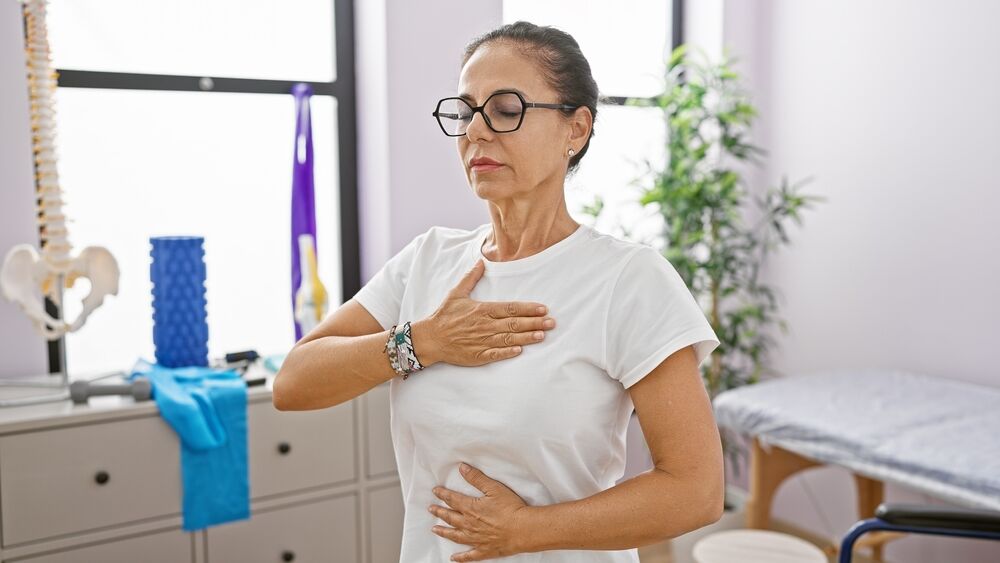
Just like many other parts of our bodies that begin to naturally deteriorate with age, our lungs and the muscles around them also weaken. Since breathing is obviously an important body function, we need to take extra care to keep our lungs strong and functional, and this can be done with breathing exercises to improve lung function.
Breathing Exercises to Improve Lung Capacity
Our lungs function somewhat like a screen door with springs for hinges, easily opening and closing on their own. Over time, our lungs lose that “springiness,” and “bad air” we usually expel gets trapped in our lungs. As that bad air builds up, the diaphragm has to work harder to get rid of it, and muscles in the neck, back and chest get involved and become stressed as well. This ultimately leads to lower oxygen levels, making any sort of physical activity more difficult.
Breathing capacity exercises help the diaphragm get back to work, remove stale air from the lungs, and help return oxygen levels to normal. Some helpful breathing exercises for elderly adults to improve lung function are:
- Pursed lip breathing – Pursed lip breathing trains your airways to stay open longer. Simply breathe in through your nose for 4 counts, then breathe out through pursed lips for 8 counts. The exhale should be at least twice as long as the inhale.
- Diaphragmic breathing, or belly breathing – This breathing exercise for elderly adults helps train and strengthen the diaphragm and is easiest to do while laying down. Place a hand on your belly so you can feel it rise as you inhale through your nose. Then feel your belly lower as you exhale slowly through your mouth. The exhale should be two or three times as long as your inhale.
- Humming breathing – Keep your stomach muscles relaxed as you slowly inhale and feel your belly fill with hair, similar to belly breathing. Briefly hold your breath when your lungs feel full. As you exhale, hum. Pull your belly muscles in as you breathe out the last of your air. Repeat no more than two or three times.
- Quick sniffs – This exercise gets your lungs working with speed. Sit in a relaxed position with the mouth closed. Breathe in and out of your nose quickly for about 15 seconds.
- Chinese breathing – This exercise incorporates a bit of a workout, so if you start to feel short of breath or your arms get too tired, stop right away. Take in three short breaths. On the first breath, raise your arms to shoulder height in front of you. On the second breath, raise your arms out to your sides in a T shape. On the third breath, raise your arms above your head. Lower your arms down to your sides as you slowly exhale. Again, this can quickly turn into a cardio workout, so if you begin to feel lightheaded or short of breath, stop.
- Buteyko breathing – Generally used by those with asthma, Buteyko breathing is a way to calm the mind and lungs when struggling to breathe. Get into a comfortable relaxed position. Rather than taking deep breathes, focus on taking slow, shallow breaths in and out through the nose.
- Feet breathing – A relaxation technique in addition to a breathing technique, feet breathing asks you to take regular breaths and imagine all your stress and tension leaving your body through your feet as you exhale. You can repeat until you feel relaxed.
Some may suggest holding your breath as a way to increase lung capacity, and while this technique can work for athletes and especially divers, it is not recommended unless under medical supervision, as it can become dangerous. The above exercises to improve breathing capacity are safer and more beneficial for seniors.
To learn about our home care services, contact our caregiving team today at 1-800-GRISWOLD or find a Caregiver near you.
Subscribe
Date: 2026-06-18
Category:
