Home Care vs. Home Health: A Guide for Families
Category:
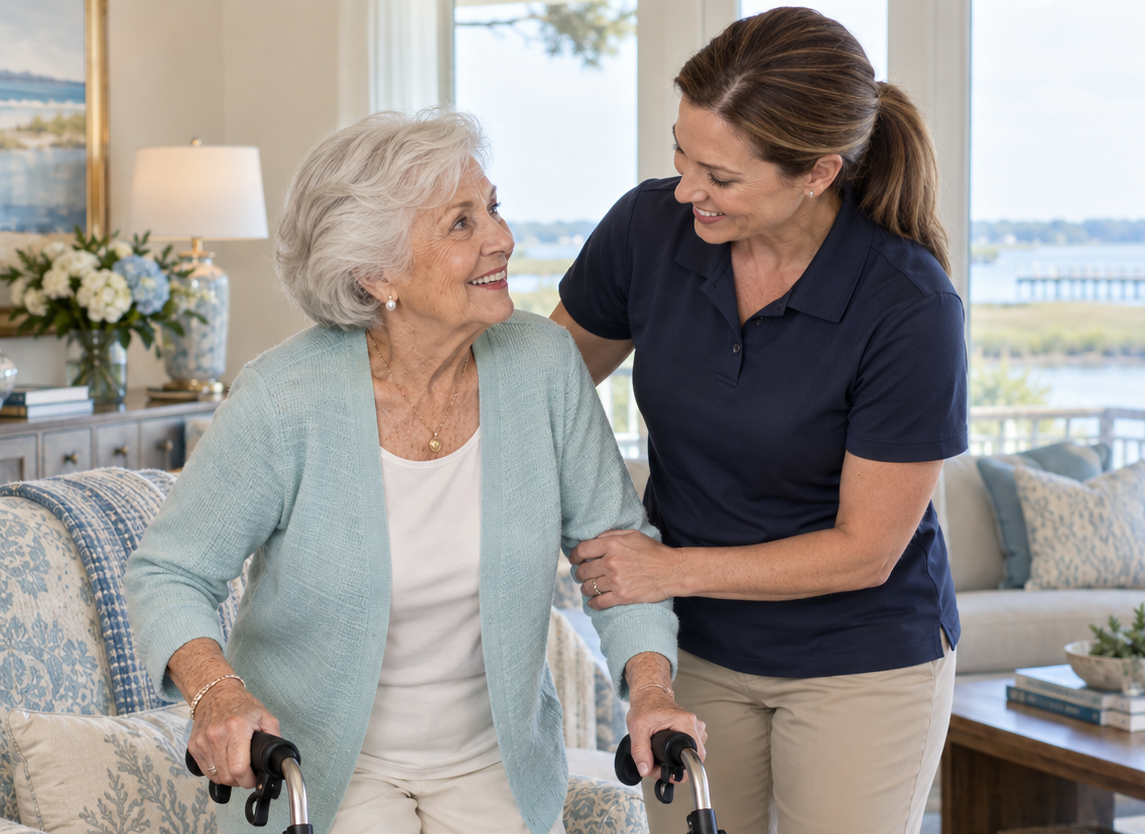
If your parent just had a fall, a stroke, a hospital stay, or another health scare, you’re probably hearing two terms thrown around that sound almost identical: home health and home care. A discharge planner may have mentioned one. A friend may have recommended the other. Now you’re trying to figure out which one your mom or dad actually needs — possibly while you’re still hundreds of miles away or juggling work and your own family.
Take a breath. Here’s what you actually need to know, in plain language.
Why This Is So Confusing
In North Carolina, both home health and home care are licensed under the same broad “home care” category. Both bring services into your parent’s home. That overlap means home health companies sometimes use “home care” in their name or on their vehicles. And home care agencies often get lumped together with “home health”. The names sound alike — but what they actually provide, who qualifies, and who pays for it are very different.
If a case manager, social worker, or physician at the hospital recommends home health or home care, it’s worth asking directly: do they mean medical home health, non-medical home care, or both?
Home Health: Medical, Temporary, and Insurance-Based
Think of home health as an extension of medical treatment, delivered at home instead of a clinic. It’s provided by nurses, therapists — such as physical therapists, occupational therapists, and speech therapists — and other licensed medical professionals. It covers things like:
- Wound care
- IV/injection administration
- Medication management
- Health status monitoring
- Pain management
- Post-surgical recovery support
- Physical, occupational, or speech therapy
Home health requires a referral from a doctor or other authorized provider. It’s also generally short-term and intermittent. Home health is meant to get your parent through a recovery period, not to provide ongoing daily support. Medicare, Medicaid, and traditional insurance may cover it. However, coverage ends once they no longer meet eligibility — even if they still need help.
That last part catches a lot of families off guard. Home health can end abruptly, not because your parent is fully recovered, but because he or she no longer meets the technical criteria. When that happens, daily needs like bathing can fall through the cracks.
Home Care: Non-Medical, Flexible, and Built to Last
Home care is help on the non-medical side. It provides help with everyday tasks that allow adults to stay safely and comfortably in their own home. A caregiver (often a CNA or home health aide) can help with the following tasks all the way up to 24/7 care:
- Bathing, dressing, and toileting
- Getting around safely and reducing fall risk
- Meal preparation and light housekeeping
- Transportation to appointments or errands
- Medication reminders and companionship
- General safety supervision
Unlike home health, private-pay home care isn’t eligibility-based. If you’re paying out of pocket, your family decides how often care happens and for how long. You have the freedom to start the moment you need it and continue for as long as it’s helpful.
As for cost: roughly half of our families pay for all of their care privately. The other half use funding sources like Veteran Affairs assistance, long-term care insurance, or local respite programs. These do require the recipient to qualify based on how much assistance they need and/or a dementia diagnosis.
A Closer Look: Bathing Assistance
Bathing is one area where these two services overlap, and that sometimes causes confusion.
If your parent qualifies for home health, a home health aide may help with bathing as part of the medical plan of care. But that assistance is usually temporary, and Medicare generally does not cover bathing help when personal care is the only service needed.
Home care, by contrast, offers flexible bathing support tailored to what your family needs. This can include getting in and out of the shower safely, grooming, dressing, and fall-risk reduction. And, care can continue for as long as it’s needed, on a schedule you set.
The Good News: You Can Use Both
You don’t have to choose one or the other. Home health and home care often work together beautifully. For example, if your parent qualifies for one insurance-covered bathing visit per week through home health, your family might add private home care for additional bathing days, transportation, meals, or companionship. Home care can fill the gaps during a medical recovery — and continue afterward if your parent needs ongoing help once home health ends.
What This Means for Your Family
Both types of care share the same goal: helping your parent age in place safely, with as much independence and dignity as possible. The right path usually isn’t “either/or” — it’s understanding which parts of your parent’s needs are medical (and temporary) versus everyday (and ongoing), so nothing falls through the cracks when a home health episode ends.
If you’re trying to sort this out for a parent in coastal North Carolina — whether that’s Wilmington, Leland, Hampstead, Wrightsville Beach, or a nearby community — you don’t have to figure it out alone. Griswold Home Care for Wilmington is a licensed home care provider and can help you understand exactly the type of support your parent needs.
Call us today at (910) 515-1378 to talk through your family’s situation.
Frequently Asked Questions
My mom was just discharged from the hospital. Does she need home health or home care?
Possibly both. Home health usually picks up right after a hospitalization to manage the medical side of recovery — wound care, therapy, monitoring — but it requires a doctor’s referral and is temporary. If she also needs help with daily activities like bathing, meals, or getting around safely once home health visits taper off, that’s where home care comes in.
Can a caregiver help with transportation to appointments or errands?
Yes, through home care — transportation is one of the standard non-medical home care services, whether that’s doctor’s appointments, picking up prescriptions, grocery runs, or just getting out of the house for a change of scenery. Home health, on the other hand, generally does not cover transportation. Home health is medical care delivered in the home, and Medicare specifically requires the patient to be homebound to qualify, so trips out of the home fall outside its scope.
Will Medicare pay for a caregiver to help with bathing?
Yes, if it is part of the medical plan of care, but not typically on its own. Medicare typically covers bathing assistance only when it’s part of a broader medical plan of care under home health, and only while your parent still qualifies. If personal care is the only service needed, Medicare usually won’t cover it. That’s a common gap private-pay home care fills.
Can we start home care right away, or do we have to wait for a referral?
If you’re paying privately, no referral is needed — your family can start home care as soon as you’re ready and set the schedule yourselves. If you’re using VA assistance, long-term care insurance, or a respite program, you’ll need to meet that program’s specific eligibility requirements first.
What happens when home health ends but my parent still needs help?
This is one of the most common (and stressful) transition points. Home health ends based on eligibility, not necessarily on whether your parent still needs support. Home care can pick up right where home health leaves off, continuing for as long as it’s helpful.
My parent lives near Wilmington — where do I even start?
Start with a phone call. A local licensed home care agency can talk through your parent’s specific situation, help you understand what’s medical versus non-medical, and explain what funding options might apply before you have to make any decisions.
Subscribe
Date: September 22, 2026
Category: