Dementia Research Isn’t Just About Clinical Trials: How Music, Gardens, and Museums Are Supporting Families
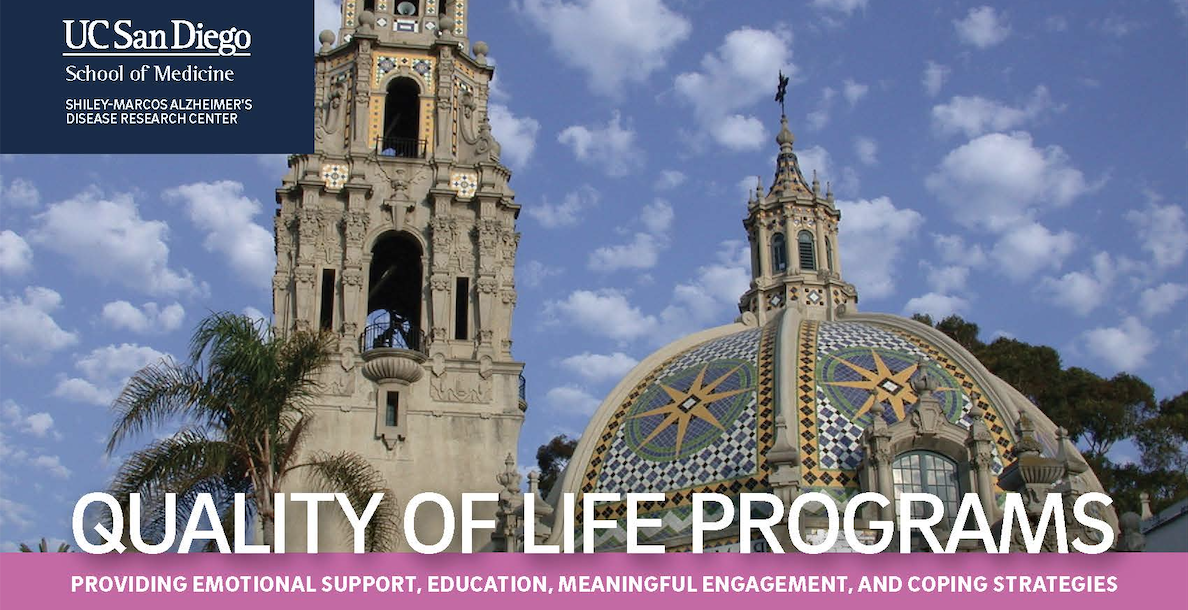
When many people hear the words “Alzheimer’s research center,” they picture laboratories, brain scans, and clinical trials. While those things are certainly part of dementia research, I recently learned more about another side of the work being done by the Shiley-Marcos Alzheimer’s Disease Research Center at UC San Diego — one that focuses deeply on human connection, dignity, emotional well-being, and quality of life.
I was struck by how intentionally the organization supports not only people living with cognitive change, but also the care partners and families walking beside them.
These programs remind us of something important:
A meaningful life does not end with a dementia diagnosis.
Dementia Care Must Include Joy, Connection, and Identity
The ADRC’s Quality of Life Programs are built around a simple but powerful idea: people living with dementia still benefit tremendously from creativity, emotional connection, sensory experiences, and opportunities to share their stories.
The center offers a variety of free community programs designed for individuals living with cognitive impairment and their care partners, including:
- Musical Biographies™
- Reminiscence Gardening
- Memories at the Museum
- Early-stage support groups
- Caregiver support and grief groups
Importantly, participation in these programs does not require enrollment in a research study.
That accessibility matters.
Too often, families assume support is unavailable until a crisis occurs. Programs like these demonstrate how community engagement, creativity, and education can help people continue experiencing moments of meaning and connection throughout the dementia journey.
The Power of Music and Memory
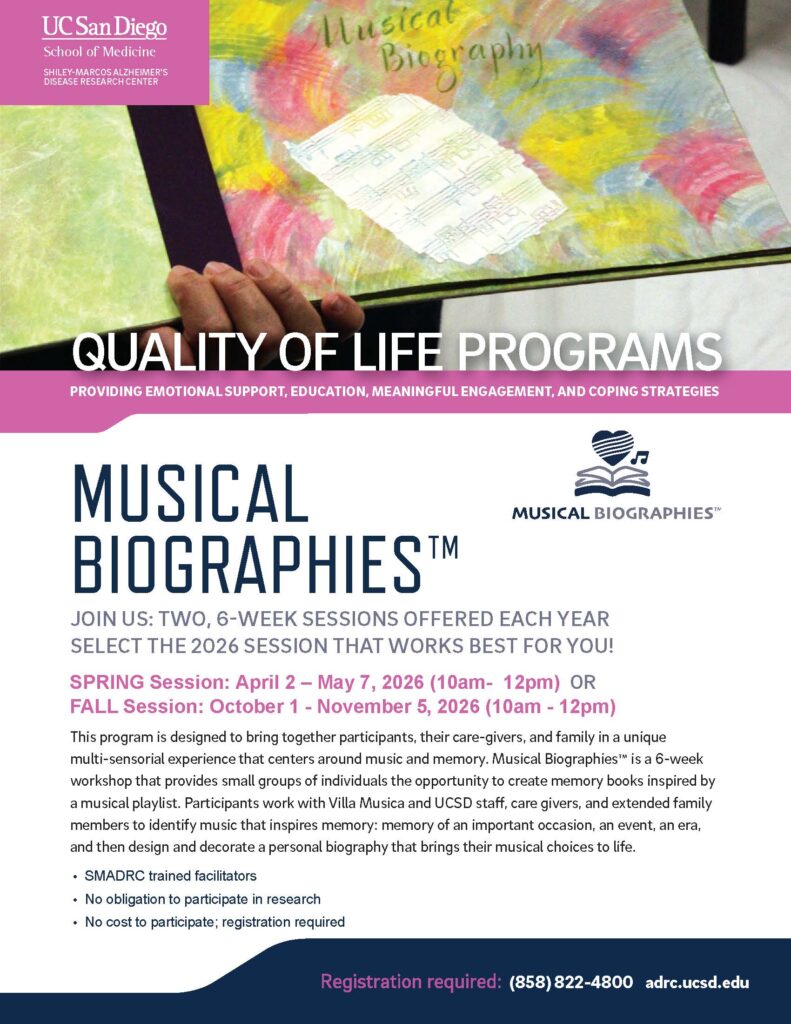
One program that especially stood out to me was the partnership between the ADRC and Villa Musica called Musical Biographies™.
In this six-week multisensory workshop, participants living with memory loss work alongside their care partners to create personalized music playlists and memory books inspired by meaningful life experiences.
Music has a remarkable ability to access emotional memory, even when other forms of communication become more difficult. A familiar song can spark recognition, storytelling, movement, laughter, and emotional presence in ways that often surprise families.
Programs like Musical Biographies™ are about preserving personhood.
Gardens, Sensory Stimulation, and Human Connection
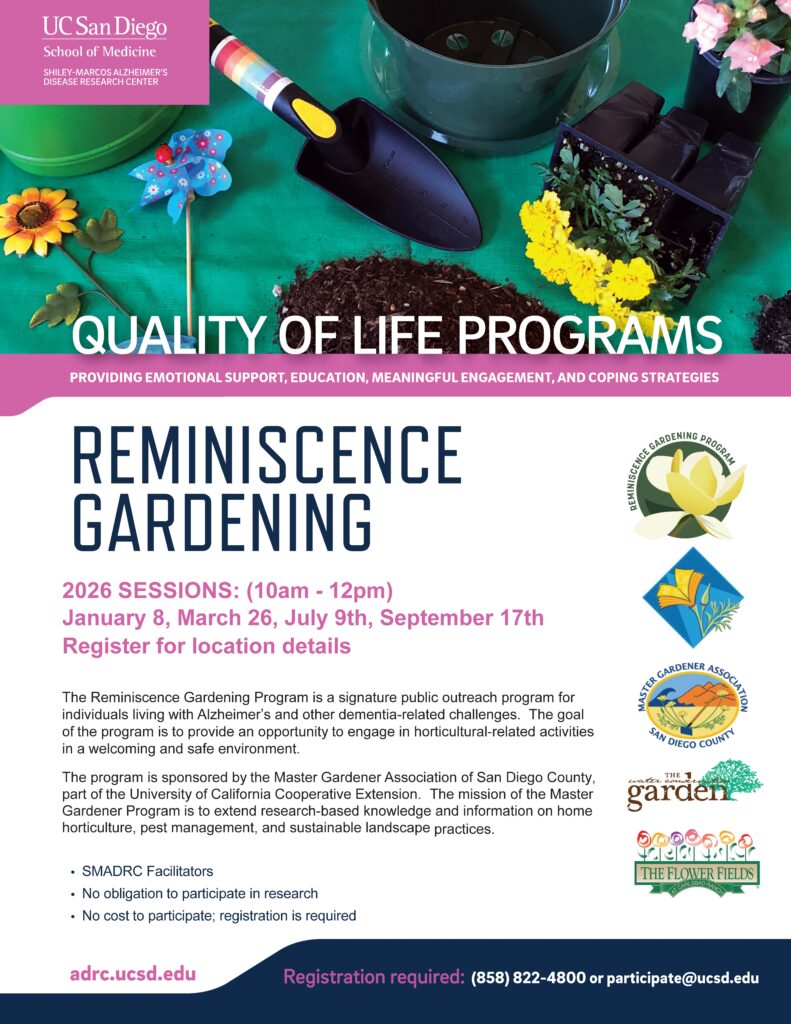
Another program highlighted during the presentation was Reminiscence Gardening, developed in collaboration with the San Diego Master Gardeners.
Participants engage with:
- plants and flowers
- familiar gardening tools
- scents and textures
- seasonal planting activities
- storytelling and reminiscence
Research and clinical experience continue to show that horticultural activities can support emotional well-being, sensory stimulation, self-esteem, and social engagement for people living with dementia.
What I appreciated most is that the program focuses on abilities that remain — not just abilities that have changed.
That philosophy aligns strongly with relationship-centered dementia care approaches.
Museums Becoming Dementia-Friendly Spaces
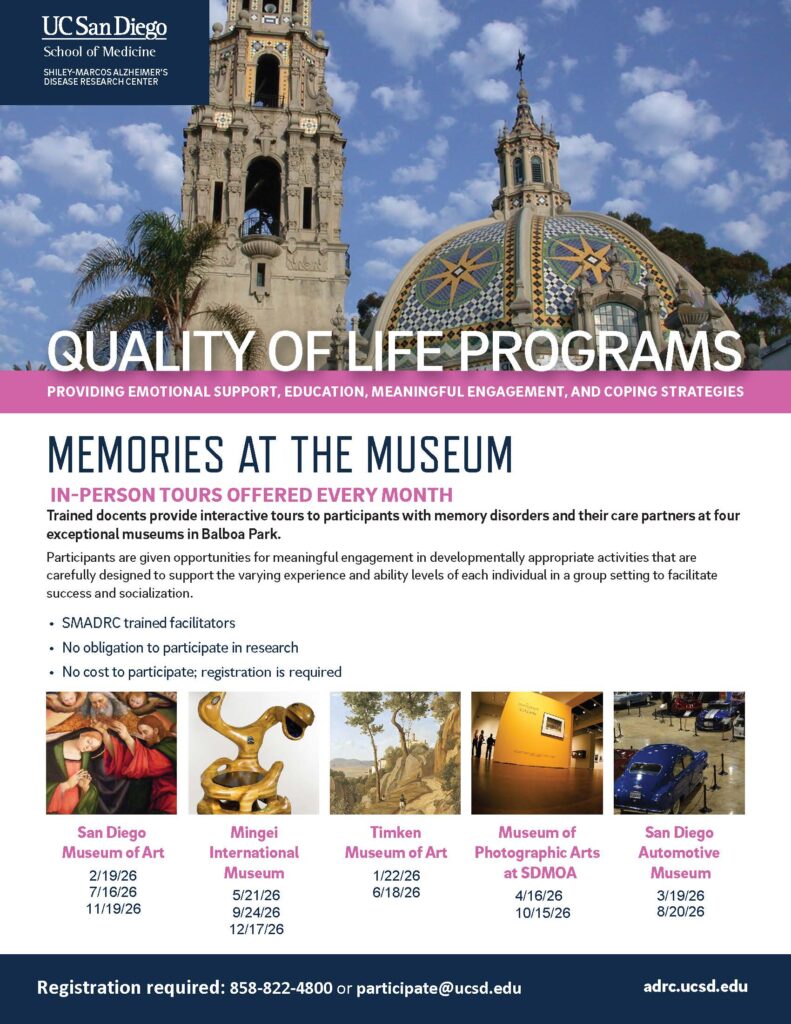
The ADRC also partners with multiple museums throughout San Diego to provide “Memories at the Museum,” a docent-led interactive museum experience for individuals living with mild-to-moderate dementia and their care partners.
Rather than traditional lecture-style tours, docents are trained to encourage:
- conversation
- storytelling
- emotional reactions
- curiosity
- shared experiences
This approach transforms museums from passive viewing spaces into places of participation and connection.
For many families, dementia gradually shrinks the world. Programs like this help expand it again.
Supporting the Entire Family System
One of the strongest messages from the presentation was that dementia affects entire family systems — not just the individual receiving the diagnosis.
The ADRC offers:
- caregiver support groups
- disease-specific support groups
- grief support after loss
- bilingual and bicultural programming
- educational outreach throughout the community
This kind of holistic support acknowledges the emotional reality of caregiving while helping families feel less isolated.
Staying Connected Through Community
Programs like these remind us that dementia care is about far more than managing symptoms — it is also about preserving identity, joy, purpose, and human connection. Meaningful experiences through music, art, gardening, social engagement, and caregiver support can make a profound difference in quality of life for both individuals living with dementia and the people who care about them.
At Griswold Home Care for North San Diego, our trained care partners can help accompany individuals to enriching community programs like these throughout San Diego County as part of our all-inclusive in-home care services. Whether attending a support group, museum program, gardening activity, or music-based engagement experience, we believe helping individuals remain connected to their community is an important part of compassionate dementia support.
To learn more about our dementia home care services or community support resources, contact our team today.
Subscribe
Date: May 19, 2026