Alzheimer’s and Dementia Awareness: Supporting La Jolla Families Through Every Stage
Category:

Alzheimer’s disease and other forms of dementia affect millions of individuals and their families across the country, including many families right here in La Jolla, Pacific Beach, Ocean Beach, Clairemont, and other San Diego areas. While often characterized by memory loss, dementia’s impact reaches much further than an individual’s ability to remember. It can also affect communication, decision making, daily routines, and overall quality of life. A dementia diagnosis can bring uncertainty and emotional challenges for families. A thorough understanding of the condition and the resources available can make a meaningful difference when helping loved ones maintain their comfort, dignity, and independence.
Understanding Alzheimer’s Disease and Dementia
Dementia is a term used to describe a wide range of symptoms that affect memory, thinking, and social abilities enough to interfere with daily life. Growing older increases the risk of dementia, but dementia is not an inevitable part of aging. Alzheimer’s disease is the most common form of dementia, making up the majority of cases. Changes in the brain due to Alzheimer’s gradually affect an individual’s ability to perform daily tasks, recognize familiar places or people, and communicate with others.
For families in San Diego and the La Jolla area, understanding these changes early gives more time to plan, seek support, and make decisions that protect a loved one’s quality of life.
Common Signs and Symptoms
Early recognition of dementia symptoms can improve outcomes by giving families more time to seek support and plan for continued wellness and independence. Some important signs to watch for include:
- Memory loss that disrupts daily life such as forgetting recent events, names, or appointments
- Difficulty completing familiar tasks at home, work, or during leisure activities
- Challenges with problem solving or following familiar plans
- Confusion about time, place, or familiar people
- Trouble following or joining conversations
- Misplacing items and being unable to retrace steps to find them
- Sudden changes in personality, mood, or behavior
- Withdrawal from social activities, hobbies, or community involvement
The way an individual responds to dementia depends on their personality and life experiences. Some people may experience a decrease in self-esteem and confidence following a diagnosis. Symptoms can vary from person to person, so any concerns about potential dementia development should be brought to a healthcare professional for evaluation.
Creating a Safe and Supportive Home Environment in La Jolla
Small adjustments at home can help reduce the effects of a dementia diagnosis and make daily life easier for those affected. For seniors living in La Jolla, Pacific Beach, Point Loma, and surrounding San Diego neighborhoods, these practical home modifications can make a real difference:
- Maintaining consistent daily routines to reduce confusion and anxiety
- Reducing clutter and distractions by designating set locations for important items
- Using labels and visual cues throughout the home to support orientation
- Encouraging participation in familiar and enjoyable activities
- Keeping the home calm, bright, and well organized to support independence
Overall, a structured and familiar home environment can significantly reduce anxiety and help a loved one maintain their sense of independence and comfort for longer.
The Wide Impact of Dementia on San Diego Families
A dementia diagnosis affects far more than just the individual. It often impacts spouses, children, close friends, and the caregivers who support them every day. Family caregivers frequently find themselves balancing medical appointments and emotional support alongside household responsibilities and personal commitments. Over time, these caregiving demands can lead to stress, fatigue, and burnout.
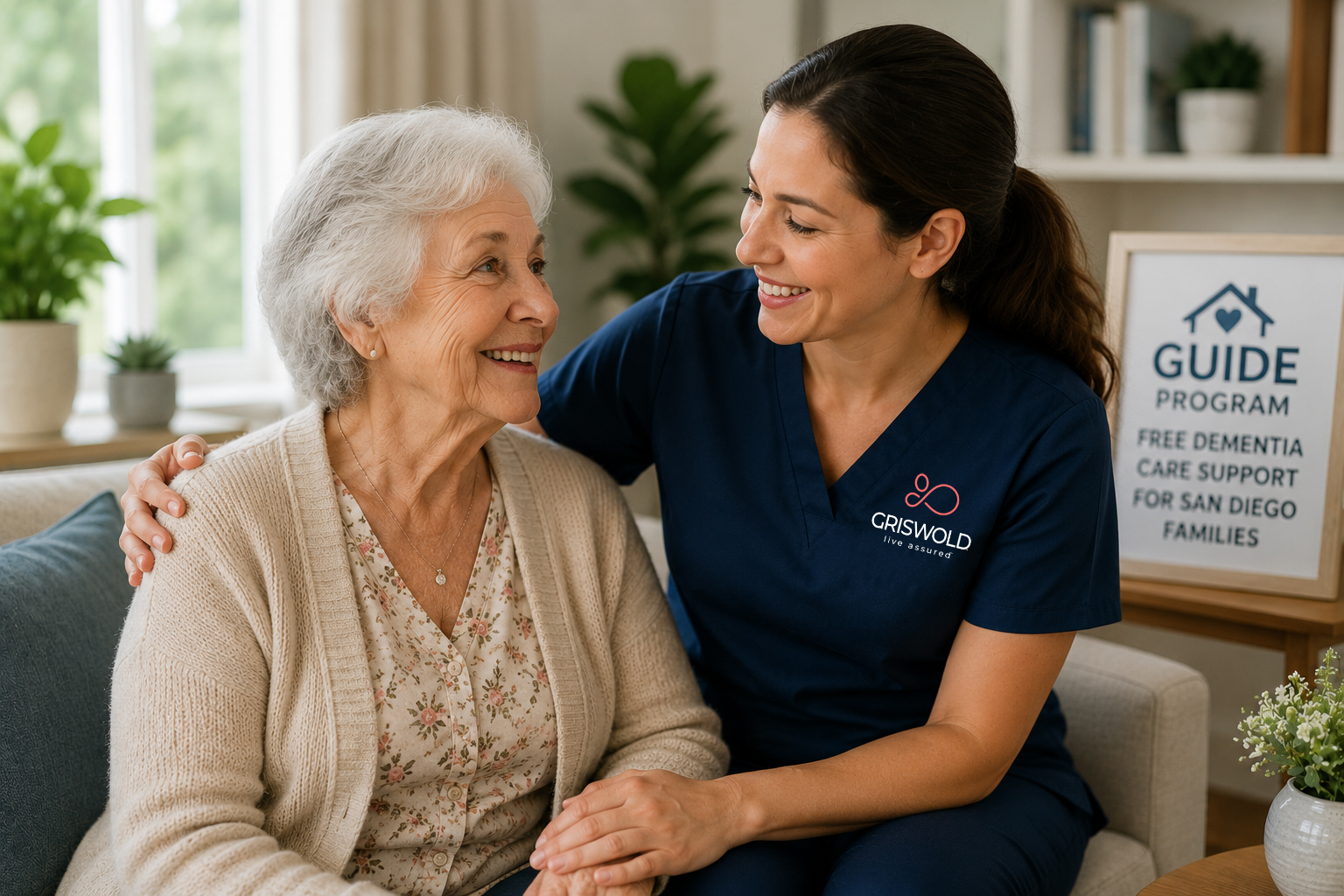
This is why a strong support system is so important. Professional caregiving services, community resources, and respite care options such as the GUIDE Program can ease some of these responsibilities. The GUIDE Program, available through Griswold Home Care for La Jolla in partnership with PocketRN, provides eligible Medicare beneficiaries with dementia with up to 76 hours of free respite care per year along with dedicated care navigation support. Contact us at (858) 346-0543 to find out if your family qualifies.
How Nonmedical Home Care Supports Dementia Patients in La Jolla
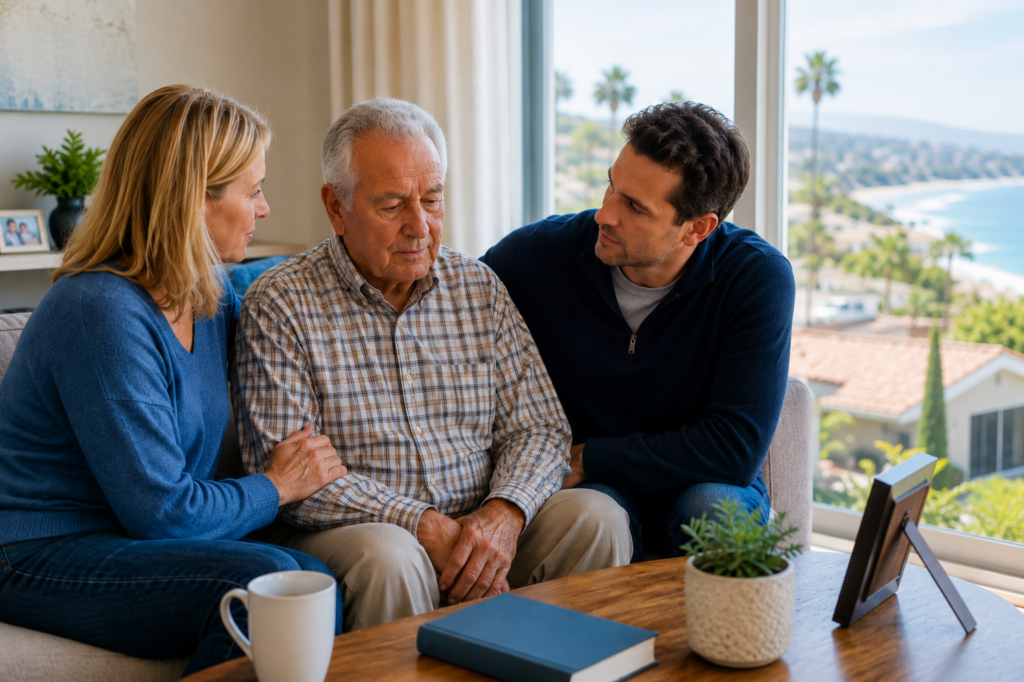
For many individuals living with Alzheimer’s disease or dementia, remaining in the comfort and familiarity of their own home provides a sense of security and stability. Nonmedical home care, such as that provided by Griswold Home Care for La Jolla, focuses on supporting daily living activities, promoting independence, and maintaining quality of life.
Our in-home caregivers across La Jolla, Ocean Beach, University City, Clairemont, and all surrounding neighborhoods can assist with:
- Personal care including bathing, grooming, and dressing assistance
- Nutritious meal preparation tailored to individual dietary needs
- Medication reminders and health monitoring
- Safety supervision and fall prevention
- Transportation to medical appointments and community activities
- Companionship and social engagement to reduce isolation
- Frequent reevaluation of care needs as the condition progresses
The companionship provided by a consistent, familiar caregiver is especially valuable for individuals with dementia. A trusted presence in the home helps maintain a sense of normalcy and reduces feelings of fear and uncertainty that often accompany a diagnosis. With a trained professional from Griswold Home Care for La Jolla in the home, families can feel confident knowing their loved one is well cared for and safe.
Our compassionate team at Griswold Home Care for La Jolla is here to help. Whether your loved one has recently been diagnosed or needs increased support as their condition progresses, we are ready to create a personalized care plan that supports their dignity and independence.
Raising Awareness and Reducing Stigma
Alzheimer’s and dementia awareness goes beyond personal understanding. True awareness means fostering compassion, building supportive communities, and creating environments where individuals living with dementia are treated with the dignity and inclusion they deserve.
By working together, families, caregivers, healthcare providers, and community members across La Jolla and San Diego can improve the quality of life for those affected by cognitive decline. When people feel supported, respected, and included, they are more empowered to continue participating in their community and living life on their own terms.
Frequently Asked Questions About Dementia Care in La Jolla
What is the difference between Alzheimer’s disease and dementia?
Dementia is an umbrella term that describes a group of symptoms affecting memory, thinking, and social abilities. Alzheimer’s disease is the most common cause of dementia, accounting for the majority of cases. Not all dementia is caused by Alzheimer’s, but all Alzheimer’s disease results in dementia symptoms.
What are the early warning signs of dementia in seniors?
Early signs include increasing forgetfulness that disrupts daily life, difficulty completing familiar tasks, confusion about time or place, trouble following conversations, and changes in personality or mood. If you notice these signs in a loved one in La Jolla or San Diego, it is important to consult a healthcare professional as early as possible.
Can someone with dementia stay at home safely in La Jolla?
Yes, in most cases. With the right level of in-home support, many people with dementia can remain safe at home for years. Griswold Home Care for La Jolla provides structured routines, safety monitoring, and compassionate care that makes aging in place possible even as the condition progresses.
What is the GUIDE Program and how can La Jolla families access it?
The GUIDE Program is a Medicare-supported initiative that provides eligible families with up to 76 hours of free respite care per year, a dedicated care navigator, and 24/7 caregiver support. Griswold Home Care for La Jolla participates in the GUIDE Program through our partnership with PocketRN. Call us at (858) 346-0543 to find out if your family qualifies.
How do I get started with dementia home care in La Jolla?
Simply call Griswold Home Care for La Jolla at (858) 346-0543 or visit griswoldcare.com/greater-la-jolla. Our team will schedule a free care consultation to understand your loved one’s needs and build a personalized dementia care plan.
Care for La Jolla is here to help.
Medicare families.
Sources:
https://www.alz.org/alzheimers-dementia/10_signs
https://www.alzheimers.org.uk/get-support/help-dementia-care/understanding-supporting-person-dementia
https://www.seniorliving.org/memory-care/alzheimers/awareness/
Subscribe
Date: June 24, 2026
Category: