Winter Safety Tips for Seniors
Category:
Staying Safe Through the Cold Months
Winter in the Midwest can be beautiful—but it can also bring serious safety concerns for seniors. Snow, ice, and colder temperatures increase the risk of slips, falls, and health complications. With a little preparation and awareness, seniors and their families can stay safe, warm, and confident all winter long.
Why Winter Poses Extra Risks
As we age, our balance, vision, and reaction time can change. Combine that with icy sidewalks, snowy driveways, and frigid temperatures, and everyday tasks—like checking the mail or walking to the car—can become more dangerous. Falls are one of the leading causes of injury for older adults, so prevention is key.
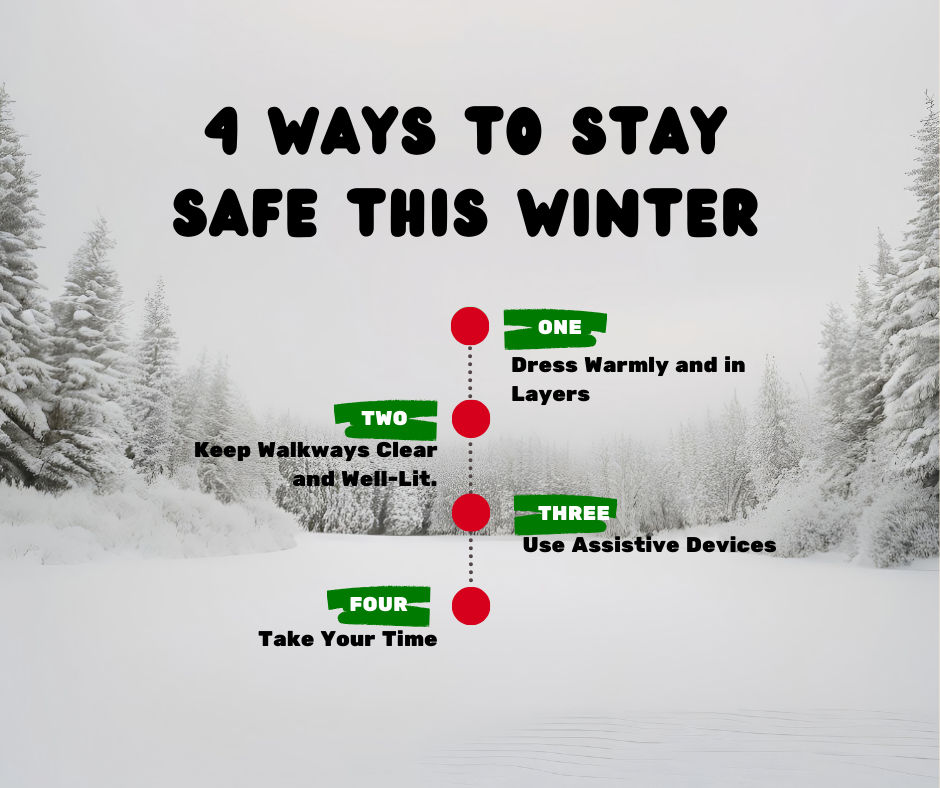
Tips to Stay Safe During the Winter Months
1. Dress Warmly and in Layers
Hypothermia can set in quickly, even with short exposures to the cold. Seniors should wear:
- A warm coat
- Gloves or mittens
- A hat
- Non-slip, insulated boots
- Layers for added warmth
2. Keep Walkways Clear and Well-Lit
Snow and ice are big fall hazards. Family members, neighbors, or a home care provider can help with:
- Regular shoveling
- Laying down salt or sand
- Making sure entrances are lit for evening or early morning walkways
3. Use Assistive Devices
Using a cane, walker, or ice tip attachment can help improve stability on slippery surfaces. Even if a senior doesn’t use one year-round, winter is a great time to add extra support.
4. Take Your Time
Moving slowly and taking shorter steps can significantly lower the risk of slipping. Rushing—especially on driveways, parking lots, or sidewalks—can lead to dangerous falls.
What to Do If You Fall on the Ice
Even with all the precautions in place, accidents can still happen. Here’s what seniors should do if they fall:
1. Stay Calm and Assess Pain
Take a moment to breathe. Determine if you feel pain in your hips, back, arms, or head—common injury points during icy falls.
2. Don’t Rush to Get Up
Trying to stand too quickly can make injuries worse. Instead:
- Roll onto your side
- Get onto your hands and knees
- Use something sturdy—like a car, railing, or step—to assist yourself in rising
3. Call for Help if Needed
If you feel dizzy, weak, or suspect you may have broken a bone, call 911 or your trusted emergency contact. It’s always better to be cautious.
4. Seek Medical Evaluation
Even if the fall “doesn’t seem too bad,” seniors should notify a family member and consider visiting a healthcare provider. Some injuries, especially head injuries or fractures, don’t show symptoms immediately.
How Griswold Home Care Fargo Can Help Keep Seniors Safe
Winter safety shouldn’t be stressful. At Griswold Home Care Fargo, we help seniors stay safe and independent all winter long with support such as:
- Assistance with walking or mobility
- Help with errands to avoid unnecessary trips outdoors
- Light housekeeping, including keeping entryways dry and safe
- Companionship, so seniors are never alone when they need help
- Post-fall support, including recovery assistance and increased supervision during healing
Whether your loved one needs a few hours of help each week or more consistent care, our team is here to support you through the cold months—and every season after.
If you’re concerned about winter safety for yourself or a loved one, reach out today.
Griswold Home Care Fargo is here to provide dependable, compassionate, and experienced support right in the comfort of your home.
📞 Call us at 701-850-2000
🌐 Or visit our website to learn more and schedule a free consultation.
Stay safe, stay warm, and remember—you don’t have to navigate winter alone!
Subscribe
Date: December 10, 2025
Category: