
Understanding Parkinson’s Disease
Category:
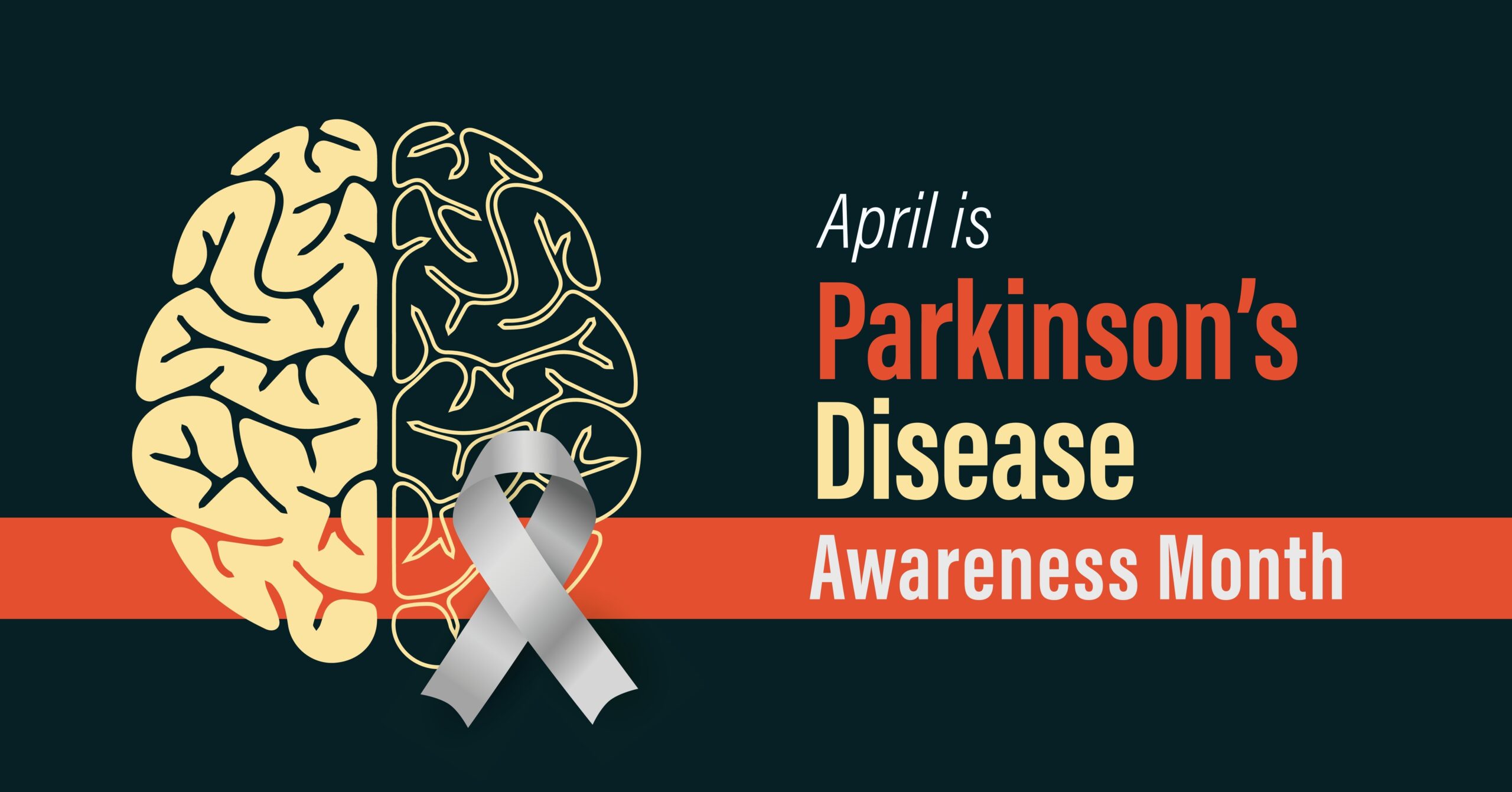
James Parkinson identified the symptoms of Parkinson’s Disease more than 200 years ago. To honor his discovery, April is Parkinson’s Disease Awareness Month, as his birth month is April.
Parkinson’s Disease is a chronic neurological condition that causes a gradual loss of nerve cells in the brain that produce dopamine. Dopamine carries signals to the part of the brain that controls movement and coordination. Thus, the disease causes a gradual loss of movement and coordination.
Understanding Parkinson’s
Fast Facts
- Nearly 90,000 people in the U.S. are diagnosed with Parkinson’s each year.
- Over 1 million people in the U.S are currently living with Parkinson’s.
- Symptoms are not movement exclusive, and there are several non-movement symptoms.
- Through medications, lifestyle changes, exercise, and in some cases, surgery symptoms can be managed.
- The average age of onset is 60, with the likelihood of developing symptoms increasing as you age.
Early Signs
It can be difficult to diagnose or tell if a loved one has PD. Symptoms typically develop slowly over the years and often vary by individual. That being said, here are several early signs of Parkinson’s:
- Tremors, often in the hands or fingers
- Small handwriting
- Loss of smell
- Trouble sleeping
- Trouble moving, including stiffness and balance problems
- Constipation
- Soft or low voice
- Reducing facial expressions
- Dizziness or fainting
- Stooping or hunching
Managing Symptoms
While there is currently no cure for Parkinson’s, there are many strategies for managing symptoms. The best way to manage the disease is to plan and find the right mix of management strategies. A few popular strategies for managing symptoms include exercising for 2.5 hours weekly, medications focused on replenishing dopamine, maintaining a healthy diet, including drinking a lot of water, eating fiber-heavy foods, and limiting sugar, alcohol, and caffeine. These strategies, when used, can allow you to continue to lead a fulfilling life.
Progression of Symptoms
The five stages of PD used to describe how motor symptoms progress in those living with Parkinson’s.
Stages 1 and 2 are early stages. Symptoms are mild and often do not interfere with ADLs.
Stages 2 and 3 are mid-stages. Symptoms may start to get worse, and falls may become more common.
Stages 4 and 5 are the advanced stages. Symptoms are fully developed, and constant care is needed.
Local Resource
The American Parkinson Disease Association lists several local groups located throughout Broward County and the rest of Florida. In the Fort Lauderdale area, you can find support through the following groups:
- There is a PWP and Care Partners Support Group that meets at Cavalry Chapel every other Thursday.
- Another PWP and Care Partners Support Group that meets at Sartory Hall Senior Center the 4th Thursday monthly.
- Allegro Senior Living hosts a different PWP and Care Partners Support Group on the 2nd Tuesday of each month.
- A fourth PWP and Care Partners Support Group is held at Encompass Rehab the 1st Tuesday monthly.
- There is a PD Support Group that meets periodically at Coral Springs Senior Center.
- Finally, there is a PWP and Caregivers group that meets and exercises at Raw Kickboxing and Fitness the 3rd or 4th Saturday of the month.
Griswold is here for you
If you or a loved one is living with Parkinson’s, a Griswold-referred Caregiver can help support you in the comfort of your own home. They may offer a variety of specialized home Care Services, including Respite Care, Live-in care, or one of our Essential Care Services, including Companionship, Personal care, and Homemaking.
For those with Parkinson’s Disease who need ongoing support, our Live-in Care can make a huge impact on their life. One of our referred Caregivers will live in the home, and often these arrangements result in healthy and meaningful friendships that can improve the client’s overall quality of life.
Contact Us
If you are living with Parkinson’s in the Fort Lauderdale area and need support to continue to age at home, give us a call today. We would be happy to help you get the care you need.
License #: NR30211028
Subscribe
Date: April 24, 2025
Category: