
When a Spouse Becomes the Caregiver After a Stroke in Cary, NC
Category:

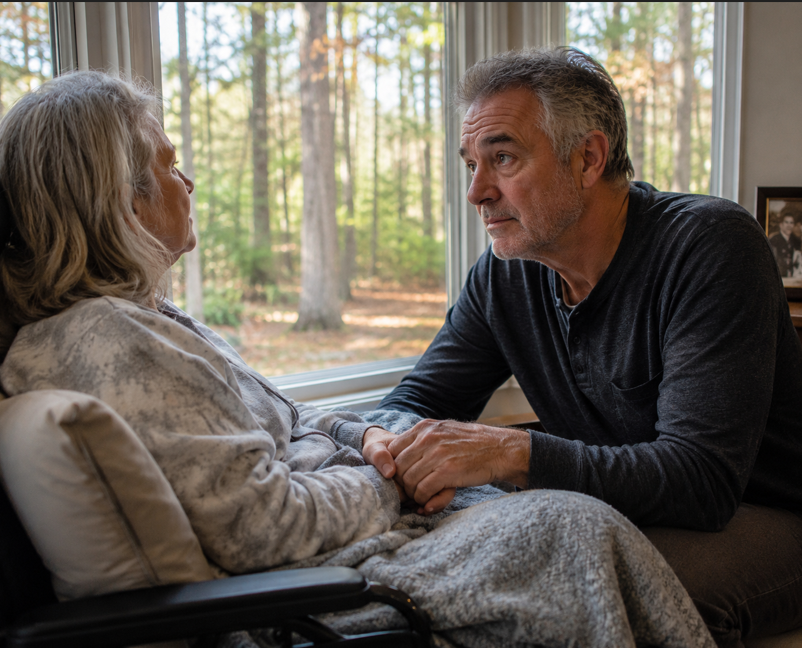
Every year, thousands of spouses unexpectedly become full-time caregivers after a loved one suffers a stroke. While the focus is often on the person recovering, the husband or wife providing care frequently experiences exhaustion, isolation, and burnout. Home care can provide the support families need to remain safely at home while protecting the health of the caregiver.
The Hidden Exhaustion of Family Caregiving
Names and certain identifying details have been changed to protect our client’s privacy.
As part of my work with families at Griswold Home Care, I meet people in situations like this every week. I recently met with a man in Cary whose wife had suffered a devastating stroke. Her condition was poor. She was nonverbal, and he wasn’t sure how much she understood anymore. He didn’t know what she wanted, what she needed, or whether she could fully comprehend what he was saying to her.
Her coordination had diminished significantly. Although she could still stand briefly with a walker, she was an obvious fall risk. She relied on a feeding tube and depended on others for every basic need.
It’s heartbreaking to witness.
But strangely, it’s also inspiring.
This was a beautiful story of love.
He cared for her every need 24 hours a day at tremendous personal sacrifice. He had given up nearly everything that once brought him joy — hunting, fishing, time outdoors, and even work. He hadn’t been back to his job since her stroke eight months earlier. He was now a full time stroke caregiver.
His employer had been incredibly gracious, encouraging him to take care of his wife and offering him the flexibility to work remotely whenever he felt able.
Watching him care for her was deeply moving. He spoke gently to her. He repositioned her carefully. He handled every task with patience and tenderness.
She was in the best hands possible.
Why Many Families in Cary Wait Too Long to Start Home Care
But despite all of his love and devotion, he was exhausted and had caregiver burnout.
The husband was so busy caring for his wife and struggling to keep his head above water, he couldn’t see the life ring sitting an arm’s length away.
He was also one of the kindest people you could ever meet — the kind of person who instantly makes you want to help in any way possible.
The simplest solution seemed obvious: bring professional in-home care services into the home a few days each week.
Not to replace him.
Not to take over.
But to support him.
Home care could allow him time to:
- Pay bills
- Grocery shop
- Work enough to maintain his family’s health insurance
- Rest and recharge
- Spend a few peaceful hours in the woods where he felt calm and restored
He immediately understood the value of it. In fact, he was eager to get started.
But six weeks passed, and care still hadn’t begun.
I checked in with him three separate times. Every time, he told me he wanted to start.
He needed to start.
But something always got in the way.
The reality was simple:
He was so overwhelmed caring for his wife that he couldn’t even find the time or emotional energy to complete the paperwork needed to begin receiving help.
And this is something we see often with families throughout Cary and the surrounding area.
Many family caregivers wait too long to ask for help — not because they don’t want support, but because they’re physically and emotionally maxed out.
Sometimes the Caregiver Needs Care Too
I knew he truly wanted to begin home care services, so I visited his home again.
Her condition had declined even further.
She could no longer stand for more than 30 seconds at a time, and he was moving feverishly from one task to another trying to keep up with her needs.
I helped him get her settled comfortably so we could sit down together for five uninterrupted minutes.
That’s all it took.
We completed the paperwork together at his kitchen table.
When we finished, he leaned back and let out a long sigh.
“Thanks,” he said quietly. “I needed that.”
That moment stayed with me.
Not because the paperwork was difficult.
But because overwhelmed caregivers often feel trapped. Even small tasks can feel impossible when you’re carrying the physical and emotional weight of caring for someone you deeply love.
When Should Families Consider Home Care After a Stroke?
Everyone’s journey is different and the work involved for caring for your loved one will differ too. When someone you trust or like says to you “you can’t keep doing it this way”, please listen to them. It’s admirable the spouse wants to do and be everything for the person they love but every human being needs rest to be the best caregiver they can be. Often, your care schedule isn’t sustainable and you need relief. Start sooner so your health doesn’t decline also. You can also visit The American Stroke Association website to view their many resources https://www.stroke.org/en/help-and-support/support-group-leader-resources/lesson-modules/self-care-for-caregivers/maintaining-health-and-well-being-as-a-caregiver .
Home Care Can Give Families Breathing Room
Care begins this week for their family, and I’m grateful we’ll have the opportunity to help.
His wife needs care.
But he needs care too.
He needs rest. Support. Time to breathe. Time to protect his own health for the long journey ahead.
One of the biggest misconceptions about home care is that families think asking for help means they’re giving up.
In reality, accepting help is often what allows a spouse to continue being a loving husband or wife instead of becoming completely consumed by exhaustion.
Professional caregiving support can provide families in Cary with relief, safety, companionship, and peace of mind during some of life’s most difficult seasons.
Compassionate Stroke Recovery Support in Cary, NC
At Griswold Home Care, we understand how overwhelming stroke recovery and long-term caregiving can become for families.
Whether your loved one needs help after a stroke, assistance with mobility and fall prevention, personal care, or simply companionship so a family caregiver can rest, our goal is to help families remain safely and comfortably at home.
If your family is feeling overwhelmed, you do not have to carry it alone.
Sometimes the hardest step is simply getting started. If you’re caring for a spouse after a stroke in Cary, Apex, Morrisville, or the surrounding communities, we’re here to answer your questions—whether you’re ready to begin care now or simply need someone to talk through your options. Sometimes one conversation can make the path ahead feel much more manageable.
Frequently Asked Questions
How soon after a stroke should home care begin?
As soon as the family begins struggling with daily care or safety concerns. Early support often prevents caregiver burnout.
Can home care help someone who uses a feeding tube?
While home care agencies do not provide skilled nursing, caregivers can assist with many daily activities and work alongside nurses and therapists.
How many hours of care can we start with?
Many families begin with just a few hours a week and increase care as needs change.
Subscribe
Date: July 2, 2026
Category: